Keeping a commercial facility clean is not just about appearances. The right cleaning approach directly affects employee health, operational efficiency, brand perception, and long-term facility costs. Yet many businesses struggle to understand the difference between regular cleaning and deep cleaning, and more importantly, when each is truly necessary.
Relying solely on surface-level cleaning can leave hidden contaminants, accelerated wear, and health risks unnoticed. On the other hand, overusing deep cleaning without a strategy can waste time and resources. Knowing when to use each approach is key to maintaining a safe, professional, and cost-effective environment.
This guide breaks down the differences between regular and deep cleaning, explains when each is needed, and shows how professional Commercial Cleaning Services and Janitorial Services—delivered the right way—support healthier, better-run facilities. Throughout, we’ll highlight how Assett Commercial Services helps businesses implement the right balance for long-term success.
Understanding Regular Cleaning
Regular cleaning refers to the recurring tasks performed daily, nightly, or weekly to maintain a baseline level of cleanliness. These services focus on visible areas and high-use surfaces to keep the facility functional and presentable.
What Regular Cleaning Typically Includes
Regular Janitorial Services are designed to prevent dirt and debris from accumulating. Common tasks include:
-
Emptying trash and recycling
-
Dusting desks, counters, and horizontal surfaces
-
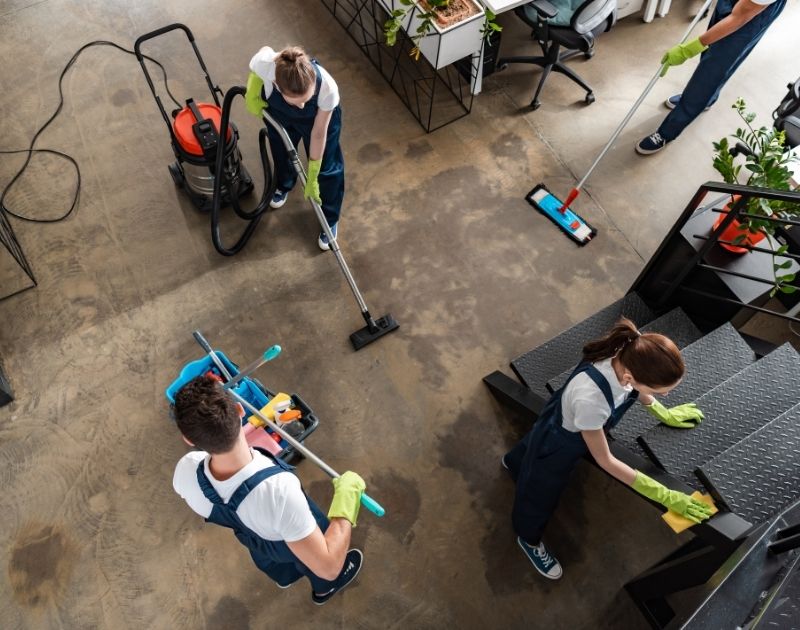
Sweeping, vacuuming, and light mopping
-
Cleaning restrooms and restocking supplies
-
Wiping down breakrooms and kitchenettes
-
Spot-cleaning glass and entryways
These tasks are essential for day-to-day operations. They help maintain hygiene, reduce clutter, and create a consistent experience for employees, clients, and visitors.
Why Regular Cleaning Matters
Regular cleaning supports:
-
Employee productivity: Clean spaces reduce distractions and discomfort.
-
Health and hygiene: Frequent removal of surface dirt limits the spread of germs.
-
Professional appearance: Facilities look organized and well cared for.
-
Operational continuity: Issues like overflowing trash or dirty restrooms are prevented before they disrupt operations.
However, regular cleaning has limits. It is not designed to address embedded grime, long-term buildup, or hard-to-reach areas. Over time, these unseen issues can undermine even the most consistent janitorial schedule.
What Is Deep Cleaning?
Deep cleaning goes beyond routine maintenance. It is a more intensive, detail-oriented process designed to eliminate buildup, bacteria, and contaminants that regular cleaning does not address.
Common Deep Cleaning Tasks
Deep Commercial Cleaning Services often include:
-
Detailed floor care (scrubbing, stripping, and refinishing)
-
Carpet extraction and stain removal
-
Cleaning behind and under furniture and equipment
-
High-dust removal from vents, ledges, and fixtures
-
Detailed restroom sanitation
-
Disinfecting high-touch surfaces throughout the facility
-
Cleaning interior glass, frames, and tracks
These tasks require specialized equipment, products, and trained personnel. Deep cleaning is typically performed on a scheduled basis rather than daily.
The Purpose of Deep Cleaning
Deep cleaning helps:
-
Restore surfaces and flooring
-
Improve indoor air quality
-
Reduce long-term maintenance costs
-
Address health and compliance concerns
-
Extend the lifespan of facility assets
Without periodic deep cleaning, dirt and bacteria accumulate below the surface, eventually making regular cleaning less effective and more expensive.
Key Differences Between Regular and Deep Cleaning
Understanding the distinction between these two services helps facilities make smarter decisions.
Frequency
-
Regular cleaning: Daily, nightly, or weekly
-
Deep cleaning: Monthly, quarterly, biannually, or annually
Scope
-
Regular cleaning: Visible, high-traffic areas
-
Deep cleaning: Hidden, hard-to-reach, and heavily used areas
Tools and Techniques
-
Regular cleaning: Standard supplies and equipment
-
Deep cleaning: Specialized machines, chemicals, and processes
Goals
-
Regular cleaning: Maintain cleanliness
-
Deep cleaning: Restore and protect the facility
Both are essential. One cannot replace the other.
When Regular Cleaning Is Enough
In many situations, a well-structured regular cleaning program provides everything a facility needs to operate smoothly.
Scenarios Where Regular Cleaning Works Best
Regular Janitorial Services are typically sufficient when:
-
The facility has consistent foot traffic
-
No recent construction or renovation has occurred
-
Floors and carpets are well-maintained
-
Health concerns are minimal
-
The building is newer or lightly used
Offices, professional service firms, and administrative spaces often rely primarily on routine cleaning, with occasional deep cleaning layered in as needed.
The Role of Consistency
Consistency is critical. Skipping routine tasks or reducing cleaning frequency often leads to faster buildup and more frequent deep cleaning requirements later. Assett Commercial Services focuses heavily on consistency, quality control, and accountability to ensure routine cleaning actually delivers long-term value.
When Deep Cleaning Becomes Necessary
There are times when regular cleaning simply isn’t enough. Recognizing these moments early can prevent larger problems.
Signs You Need Deep Cleaning
Consider scheduling deep Commercial Cleaning Services if you notice:
-
Lingering odors despite routine cleaning
-
Dull, stained, or slippery floors
-
Increased employee sick days
-
Visible buildup in corners or vents
-
Allergies or respiratory complaints
-
Declining facility appearance
These indicators suggest contaminants have moved beyond surface-level cleaning.
High-Risk Situations That Demand Deep Cleaning
Certain situations automatically call for deep cleaning:
-
Post-construction or renovation
-
Seasonal transitions
-
Illness outbreaks
-
Tenant move-ins or move-outs
-
Compliance audits
-
Long periods without professional cleaning
In these cases, deep cleaning resets the facility and allows regular cleaning to be effective again.
Why Relying on Only One Approach Fails
Some businesses rely entirely on regular cleaning, while others overuse deep cleaning without a maintenance strategy. Both approaches create problems.
Overusing Regular Cleaning Alone
Facilities that skip deep cleaning often face:
-
Accelerated wear on floors and carpets
-
Higher long-term maintenance costs
-
Declining indoor air quality
-
Increased complaints and health issues
Overusing Deep Cleaning
Relying too heavily on deep cleaning can:
-
Increase operational costs unnecessarily
-
Disrupt normal business operations
-
Indicate underlying issues with routine cleaning quality
The most effective strategy blends both approaches into a structured plan.
Building the Right Cleaning Strategy
A balanced cleaning program aligns routine maintenance with scheduled deep cleaning based on facility needs.
Factors That Determine the Right Mix
Every facility is different. Key factors include:
-
Square footage
-
Industry type
-
Foot traffic volume
-
Operating hours
-
Flooring materials
-
Regulatory requirements
Assett Commercial Services evaluates these variables to design cleaning programs that deliver consistent results without wasted effort.
Industry-Specific Considerations
-
Offices: Emphasis on regular cleaning with periodic deep carpet and floor care
-
Medical facilities: Frequent deep cleaning and disinfection
-
Manufacturing: Targeted deep cleaning for safety and compliance
-
Retail: Appearance-driven schedules with seasonal deep cleaning
-
Educational facilities: Deep cleaning during breaks and transitions
How Professional Cleaning Makes the Difference
The effectiveness of both regular and deep cleaning depends on execution. Professional Commercial Cleaning Services bring structure, training, and accountability that in-house or inconsistent vendors often lack.
Benefits of Professional Janitorial Services
-
Trained cleaning teams
-
Documented processes
-
Quality control inspections
-
Scalable service plans
-
Reliable staffing
-
Consistent results
Assett Commercial Services emphasizes systems, reporting, and proactive management to ensure both routine and deep cleaning are performed correctly and on schedule.
Long-Term Cost Benefits of the Right Balance
Balancing regular and deep cleaning is not just about cleanliness—it’s about financial efficiency.
Cost Advantages
-
Reduced floor replacement costs
-
Fewer emergency cleanups
-
Lower absenteeism
-
Longer equipment and surface life
-
Improved tenant and employee retention
Facilities that invest in the right mix of Janitorial Services and deep cleaning typically spend less over time than those that react to problems as they arise.
Why Assett Commercial Services Takes a Strategic Approach
Assett Commercial Services does not treat cleaning as a one-size-fits-all service. Instead, cleaning is approached as an operational system designed to protect assets, people, and brand reputation.
Their programs focus on:
-
Customized cleaning schedules
-
Data-driven quality control
-
Scalable service delivery
-
Proactive maintenance planning
-
Long-term cost efficiency
By aligning regular cleaning with scheduled deep cleaning, Assett helps businesses avoid the common pitfalls that lead to dissatisfaction and unexpected expenses.
Choosing the Right Partner Matters
The difference between average cleaning and professional cleaning often comes down to systems and accountability. Businesses that partner with experienced providers gain more than clean spaces—they gain consistency, reliability, and peace of mind.
A professional partner ensures that:
-
Routine cleaning is truly effective
-
Deep cleaning is scheduled proactively
-
Standards remain consistent across locations
-
Cleaning supports business goals rather than disrupting them
Knowing When You Need Each
Regular cleaning and deep cleaning serve different but equally important purposes. Routine Janitorial Services maintain day-to-day cleanliness, while deep Commercial Cleaning Services restore and protect the facility over time.
Understanding when to use each—and how to balance them—leads to healthier environments, better appearances, and lower long-term costs.
If your facility relies on cleaning but isn’t sure whether regular cleaning, deep cleaning, or a better balance is needed, it may be time for a strategic evaluation.
Assett Commercial Services works with businesses to assess their facilities, identify gaps, and design customized cleaning programs that deliver consistent, measurable results.
Learn how a professional approach to Commercial Cleaning Services and Janitorial Services can protect your facility, your people, and your brand—today and for the long term.