Floor stripping and waxing is one of the most misunderstood — and most important — aspects of professional floor care. Many facilities wait until floors look visibly damaged before addressing them, while others over-maintain and unintentionally shorten the life of their flooring. The reality is that proper stripping and waxing is not about aesthetics alone. It is about safety, longevity, compliance, and protecting a major capital asset.
Facilities that understand when, why, and how floor stripping and waxing should be performed are far better positioned to control costs, reduce liability, and maintain a professional environment. This is where experienced Commercial Cleaning Services and Janitorial Services, like those provided by Assett Commercial Services, make a measurable difference.
This guide breaks down everything facilities should know — from the basics of the process to timing, risk factors, and what separates professional floor care from costly shortcuts.
What Is Floor Stripping and Waxing?
Floor stripping and waxing is a restorative floor maintenance process primarily used on resilient flooring such as vinyl composition tile (VCT), luxury vinyl tile (LVT), and certain sealed surfaces.
Stripping removes old layers of floor finish (wax), embedded soil, scuffs, and contaminants that routine cleaning cannot eliminate.
Waxing (or finishing) applies multiple protective coats that restore shine, improve traction, and protect the underlying floor material.
This process resets the floor’s protective system, allowing daily and periodic maintenance to be effective again.
Why Floor Stripping & Waxing Matters for Facilities
1. Floor Longevity and Asset Protection
Flooring is one of the most expensive finishes in a facility. When wax layers become uneven, contaminated, or worn through, soil penetrates the floor surface. Over time, this causes permanent staining and surface damage that cannot be corrected without replacement.
Professional stripping and waxing:
-
Prevents premature floor replacement
-
Preserves manufacturer warranties
-
Extends usable floor life by years
Facilities that delay this service often spend significantly more long-term than those that maintain floors properly.
2. Slip-and-Fall Risk Reduction
Ironically, dirty or uneven wax buildup often increases slip risk. Old finish can become brittle, powdery, or slick when contaminated with cleaners and debris.
A professionally applied finish:
-
Restores uniform traction
-
Eliminates uneven wear patterns
-
Supports safer foot traffic in high-use areas
For facilities with public access, healthcare environments, schools, and retail spaces, this is a major liability consideration.
3. Appearance and Brand Perception
Floors are one of the largest visible surfaces in any facility. Dull, scuffed, or yellowed floors create a negative impression — even if everything else appears clean.
Clean, well-maintained floors communicate:
-
Professionalism
-
Attention to detail
-
Operational discipline
This is especially critical for customer-facing environments and facilities competing for tenants, members, or visitors.
Floors That Typically Require Stripping & Waxing
Not all floors should be stripped and waxed. Knowing the difference is critical.
Floors That Commonly Require It
-
Vinyl Composition Tile (VCT)
-
Certain Luxury Vinyl Tile (LVT) with finish systems
-
Sealed concrete with finish coatings
-
Older resilient flooring systems
Floors That Typically Do NOT
-
Hardwood
-
Laminate
-
Ceramic or porcelain tile (grout care is different)
-
Natural stone (requires specialized stone restoration)
Professional Janitorial Services evaluate flooring type, finish compatibility, and manufacturer guidelines before recommending any stripping process.
How Often Should Floors Be Stripped and Waxed?
There is no universal schedule. Frequency depends on use, environment, and maintenance practices.
General Guidelines
-
High-traffic facilities: Every 6–12 months
-
Moderate traffic: Every 12–18 months
-
Low traffic: Every 18–24 months
However, aggressive daily cleaning, improper chemicals, or neglected burnishing can shorten this timeline significantly.
Assett Commercial Services takes a data-driven approach, assessing wear patterns and maintenance history rather than relying on arbitrary timelines.
The Floor Stripping & Waxing Process Explained
A professional process follows strict steps to ensure results and avoid damage.
1. Pre-Inspection and Preparation
-
Identify floor type and existing finish
-
Protect walls, fixtures, and adjacent areas
-
Remove furniture and equipment
-
Post safety signage
2. Application of Stripping Solution
A commercial-grade stripper is applied to break down old finish layers. Dwell time is carefully controlled to avoid floor damage.
3. Mechanical Agitation
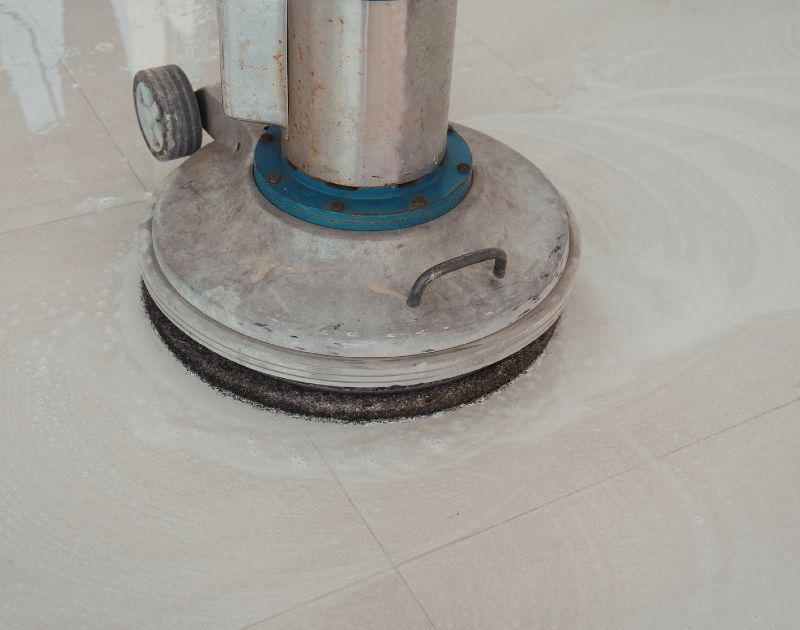
Auto scrubbers or swing machines loosen embedded finish and soil.
4. Slurry Removal
All residue is removed using wet vacuums or scrubbers. This step is critical — leftover stripper will cause finish failure.
5. Neutralization and Rinse
Floors are neutralized to ensure proper pH for new finish adhesion.
6. Finish Application
Multiple thin coats of high-solids floor finish are applied with controlled dry times between coats.
7. Cure and Final Inspection
The floor is allowed to cure before traffic resumes, ensuring durability and uniform appearance.
This process requires experience, proper equipment, and trained technicians — not shortcuts.
Common Mistakes Facilities Make
Over-Stripping
Stripping too frequently damages flooring and increases long-term costs.
Under-Stripping
Allowing wax to degrade beyond recovery leads to permanent floor damage.
Using Incorrect Chemicals
Improper products can soften, discolor, or etch flooring surfaces.
Inadequate Dry Times
Rushing the process leads to peeling, clouding, and premature failure.
Using Inexperienced Vendors
Floor care is technical. Low-bid providers often lack training, insurance, or process discipline.
The Role of Daily and Periodic Maintenance
Stripping and waxing should not compensate for poor routine cleaning.
Proper maintenance includes:
-
Daily dust mopping
-
Correct neutral cleaners
-
Scheduled burnishing or buffing
-
Prompt spill response
When daily care is done correctly, stripping intervals extend — saving money and preserving floors.
This integrated approach is a hallmark of professional Commercial Cleaning Services.
Environmental and Operational Considerations
Facilities must also consider:
-
Low-odor or low-VOC products
-
After-hours scheduling to minimize disruption
-
Safety compliance and signage
-
Proper waste disposal
Assett Commercial Services aligns floor care programs with facility operations to minimize downtime while maintaining compliance.
Why Professional Floor Care Outperforms In-House Efforts
Some facilities attempt to manage stripping and waxing internally. This often leads to:
-
Inconsistent results
-
Equipment damage
-
Chemical misuse
-
Increased injury risk
-
Higher long-term costs
Professional Janitorial Services bring:
-
Trained technicians
-
Commercial equipment
-
Product expertise
-
Documented procedures
-
Insurance and accountability
This ensures predictable results and protects both floors and people.
How Assett Commercial Services Approaches Floor Stripping & Waxing
Assett Commercial Services does not treat floor care as a one-size-fits-all service. Each facility receives a customized floor maintenance strategy based on:
-
Flooring type and condition
-
Traffic patterns
-
Industry requirements
-
Budget and operational needs
This strategic approach ensures:
-
Maximum floor life
-
Reduced liability
-
Controlled maintenance costs
-
Consistent appearance year-round
Assett’s experience across diverse facility types allows teams to anticipate issues before they become costly problems.
When to Schedule Floor Stripping & Waxing
The best time to schedule is before floors reach a visible failure point.
Warning signs include:
-
Persistent dullness after cleaning
-
Yellowing or discoloration
-
Visible scratches and scuffs
-
Uneven gloss levels
-
Increased slip complaints
Early intervention reduces labor, chemical usage, and disruption.
Final Thoughts
Floor stripping and waxing is not just about shine. It is about protecting assets, ensuring safety, and maintaining a professional facility environment. When done correctly — and at the right time — it saves money, reduces risk, and elevates the overall appearance of your space.
Facilities that partner with experienced Commercial Cleaning Services and Janitorial Services providers gain predictability, accountability, and peace of mind.
If your facility floors are losing their appearance, becoming harder to maintain, or approaching the end of their usable life, it may be time for a professional evaluation.
Assett Commercial Services delivers strategic floor care solutions designed to protect your investment and keep your facility operating at its best. Contact Assett Commercial Services today to schedule a professional floor assessment and develop a long-term maintenance plan that works for your facility — not against it.