Healthcare-associated infections (HAIs) remain one of the most persistent and costly challenges facing medical facilities today. These infections, which patients acquire while receiving treatment for other conditions, affect millions of individuals each year and place a significant burden on healthcare systems. While clinical protocols, hand hygiene, and medical technology all play vital roles in prevention, one factor is often underestimated: professional cleaning and environmental hygiene.
High-quality Commercial Cleaning Services are not simply about appearance. In healthcare environments, cleaning is a critical infection-prevention strategy that directly impacts patient outcomes, staff safety, and regulatory compliance. Facilities that prioritize structured, professional Janitorial Services dramatically reduce the risk of pathogen transmission while creating safer spaces for healing.
This article explores how better cleaning practices help prevent healthcare-associated infections and why partnering with a specialized provider like Assett Commercial Services is a strategic decision for medical facilities committed to excellence.
Understanding Healthcare-Associated Infections (HAIs)
Healthcare-associated infections occur when harmful microorganisms are transmitted within medical settings such as hospitals, outpatient clinics, dialysis centers, and long-term care facilities. Common examples include infections caused by antibiotic-resistant bacteria, viruses, and fungi that survive on surfaces for extended periods.
These infections can be transmitted through:
-
Direct contact with contaminated surfaces
-
Improperly cleaned shared medical equipment
-
Inadequate sanitation of restrooms and patient rooms
-
Poorly maintained common areas and waiting rooms
HAIs not only extend patient recovery times but also increase operational costs, expose facilities to regulatory scrutiny, and damage institutional trust. Preventing them requires a multi-layered approach—and cleaning plays a foundational role.
The Environmental Role in Infection Transmission
Pathogens do not remain confined to patient beds or treatment rooms. Studies have shown that microorganisms can survive for days or even weeks on high-touch surfaces such as:
-
Door handles
-
Light switches
-
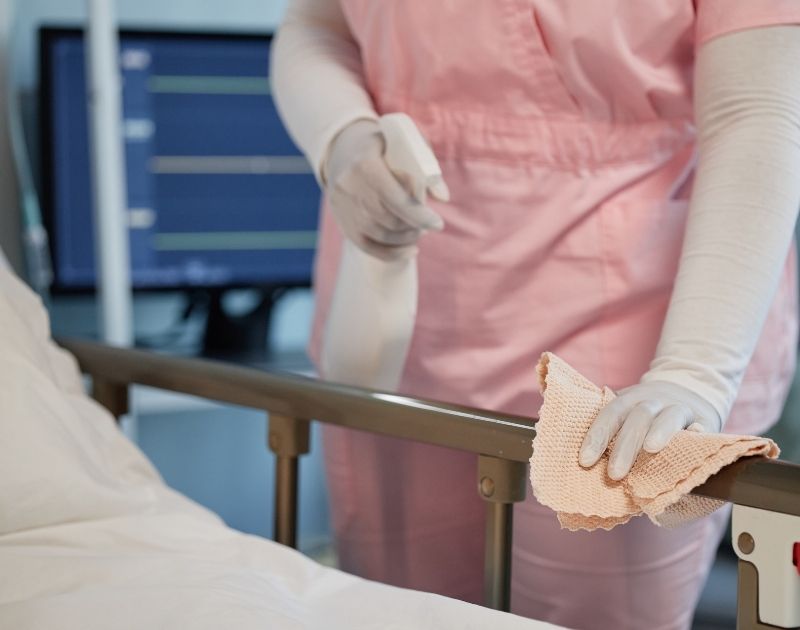
Bed rails
-
Examination tables
-
Reception desks
-
Restroom fixtures
Without consistent, thorough cleaning, these surfaces become reservoirs for infection. This is especially problematic in high-traffic healthcare environments where patients, visitors, and staff interact continuously.
Professional Janitorial Services address this challenge by implementing repeatable cleaning systems designed to reduce environmental contamination rather than simply improve appearance.
Why Standard Cleaning Is Not Enough in Healthcare
Healthcare facilities have cleaning requirements that go far beyond those of standard commercial buildings. Traditional cleaning approaches often fail in medical settings because they:
-
Lack healthcare-specific protocols
-
Use inconsistent disinfection methods
-
Do not account for cross-contamination risks
-
Rely on undertrained or overextended staff
Effective infection prevention requires process-driven Commercial Cleaning Services that follow documented procedures, use approved disinfectants, and focus on high-risk zones.
This is where specialized providers such as Assett Commercial Services deliver measurable value.
The Assett Commercial Services Approach to Infection Prevention
Assett Commercial Services specializes in professional cleaning solutions designed to support healthcare environments. Rather than applying generic cleaning checklists, Assett implements structured systems that align with healthcare expectations and operational realities.
Key elements of Assett’s approach include:
1. Standardized Cleaning Protocols
Every facility serviced by Assett follows documented, repeatable procedures. These protocols define:
-
Cleaning frequency by area
-
Proper disinfectant dwell times
-
High-touch surface prioritization
-
Room sequencing to prevent cross-contamination
Consistency is essential in infection prevention, and Assett’s systems are built to eliminate guesswork.
2. High-Touch Surface Focus
Not all surfaces present equal risk. Assett’s Janitorial Services emphasize high-touch points where pathogens are most likely to spread. These areas receive enhanced attention, ensuring that frequently contacted surfaces are disinfected thoroughly and consistently.
3. Proper Disinfectant Selection and Use
Using the wrong product—or using the right product incorrectly—can undermine cleaning efforts. Assett Commercial Services ensures:
-
Disinfectants are appropriate for healthcare environments
-
Products are applied according to manufacturer guidelines
-
Dwell times are respected to achieve effective pathogen elimination
This disciplined approach directly reduces microbial survival on surfaces.
4. Staff Training and Accountability
Even the best cleaning plan fails without proper execution. Assett prioritizes workforce training, ensuring cleaning teams understand:
-
Healthcare-specific risks
-
Infection prevention fundamentals
-
Proper use of equipment and chemicals
-
The importance of consistency and documentation
Clear accountability structures help ensure standards are maintained day after day.
Reducing Cross-Contamination Through Better Cleaning Systems
Cross-contamination occurs when pathogens are transferred from one surface or area to another—often unintentionally. In healthcare environments, this risk is especially high when cleaning tools, chemicals, or workflows are poorly managed.
Assett Commercial Services reduces cross-contamination by:
-
Assigning color-coded tools to specific areas
-
Using controlled cleaning sequences
-
Separating restroom, patient, and public-area equipment
-
Reinforcing hand hygiene for cleaning staff
These safeguards ensure that cleaning activities reduce risk rather than inadvertently spreading contaminants.
Supporting Healthcare Compliance and Inspections
Healthcare facilities operate under strict regulatory expectations. Environmental cleanliness is frequently assessed during audits and inspections, making professional Commercial Cleaning Services a compliance asset.
Assett’s structured approach supports:
-
Documentation readiness
-
Consistent visual standards
-
Alignment with infection-control policies
-
Reduced risk of deficiencies during inspections
While cleaning alone does not guarantee compliance, it forms a critical pillar of a defensible infection-prevention program.
Protecting Patients, Staff, and Visitors
Effective cleaning protects more than patients. Healthcare workers face daily exposure risks, and environmental hygiene plays a role in reducing staff illness, absenteeism, and burnout.
Clean, well-maintained environments also reassure visitors and reinforce confidence in a facility’s commitment to safety. In today’s healthcare landscape, perception and trust matter more than ever.
The Financial Impact of Better Cleaning
Healthcare-associated infections are expensive. They lead to:
-
Extended patient stays
-
Increased treatment costs
-
Higher liability exposure
-
Reputational damage
Investing in professional Janitorial Services is not merely an operational expense—it is a risk management strategy. Facilities that partner with experienced providers like Assett Commercial Services often find that proactive cleaning reduces long-term costs associated with infection-related complications.
Custom Cleaning Plans for Diverse Healthcare Settings
Not all healthcare environments are the same. A surgical center, outpatient clinic, and long-term care facility each present unique challenges.
Assett Commercial Services develops customized cleaning plans that reflect:
-
Facility size and layout
-
Patient population risk profiles
-
Operating hours and traffic patterns
-
Specific sanitation priorities
This tailored approach ensures cleaning resources are applied where they matter most.
Beyond Cleaning: Creating a Culture of Safety
Preventing healthcare-associated infections requires alignment across an organization. When environmental cleaning is treated as a strategic function rather than a background task, it supports a broader culture of safety.
Assett works as a partner—not just a vendor—supporting healthcare leaders in reinforcing consistent standards and long-term accountability.
Why Healthcare Facilities Choose Assett Commercial Services
Healthcare organizations choose Assett because of its:
-
System-driven approach to Commercial Cleaning Services
-
Emphasis on consistency and accountability
-
Healthcare-aware Janitorial Services
-
Commitment to protecting patients and staff
-
Scalable solutions for growing organizations
Assett understands that in healthcare, cleaning is not optional—it is mission-critical.
Cleaning as a Frontline Defense Against HAIs
Healthcare-associated infections are not inevitable. While no single measure can eliminate risk entirely, better cleaning dramatically reduces environmental contamination and supports safer care delivery.
By investing in professional, structured Janitorial Services, healthcare facilities strengthen one of their most powerful defenses against infection. Assett Commercial Services delivers the systems, expertise, and consistency required to meet the demands of modern healthcare environments.
If your healthcare facility is serious about reducing infection risk, protecting patients, and maintaining high environmental standards, it’s time to evaluate your cleaning strategy.
Connect with Assett Commercial Services today to learn how professional Commercial Cleaning Services can support infection prevention, compliance, and long-term operational excellence.